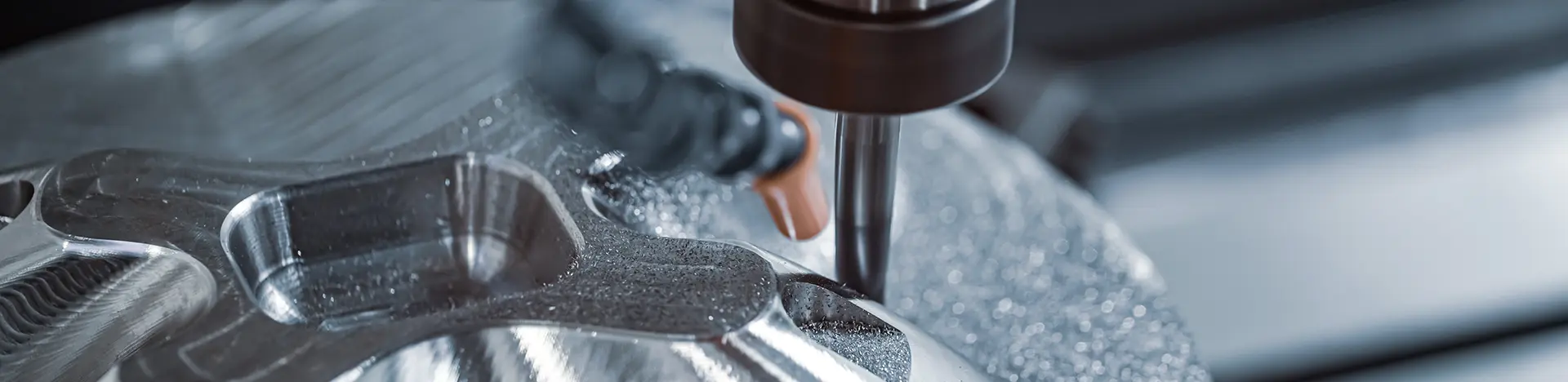
Precision Secondary Machining & Inspection
From precision reaming of micro gears to critical dimension inspection of ABS tone rings, our secondary machining and inspection capabilities ensure every part achieves the precision required by drawings. With advanced CNC equipment, extensive process experience and comprehensive inspection methods, we meet customer requirements for micron-level tolerances and zero-defect quality.
Precision Secondary Machining & Inspection Process Overview
Workpiece Setup & Alignment
Precision Machining
Deburring & Surface Finishing
Dimensional Inspection
Reporting & Release
Workpiece Setup & Alignment
Sintered powder metallurgy parts or stamped semi-finished products are precisely clamped onto CNC machine tools or dedicated fixtures. Precision chucks, vises or custom fixtures ensure accurate positioning and stable clamping. Alignment is performed using dial indicators or laser tool setters to establish workpiece coordinate systems, providing datums for subsequent precision machining.
Precision Machining
Secondary precision machining including turning, milling, drilling, reaming, grinding and tapping is performed according to part drawing requirements. CNC programming precisely controls tool paths, cutting parameters and machining sequences to achieve micron-level dimensional tolerances and surface roughness requirements. Precision machining is used to correct sintering distortion, machine features that cannot be directly formed (such as threads, oil grooves, cross holes), or achieve higher precision grades.
Deburring & Surface Finishing
Machined parts may have burrs on edges. Burrs are removed using mechanical brushing, vibratory finishing, thermal deburring or electrochemical deburring methods to ensure safe assembly and usage. For specific surface requirements, superfinishing, lapping or polishing processes are applied to reduce surface roughness, improve appearance or enhance wear resistance.
Dimensional Inspection
Fully dimensional inspection of machined parts is performed using high-precision measuring tools and inspection equipment. Digital calipers, micrometers, height gauges, roughness testers, profile projectors, vision measuring systems and CMM are used to inspect critical dimensions, geometric tolerances and surface quality. Inspection data is recorded and archived to achieve product quality traceability.
Reporting & Release
After completing all inspections, a quality inspection report is generated, summarizing critical dimension data and acceptance results. Qualified parts are released after final review and proceed to cleaning, rust prevention and packaging. Non-conforming parts identified during inspection are marked, isolated and processed according to non-conforming product control procedures. All inspection records are archived by batch for traceability.
Advantages of Precision Secondary Machining & Inspection
Micron-Level Precision
Achieves dimensional tolerances of ±0.005mm and stringent geometric tolerance requirements.
Process Versatility
Covers multiple machining methods including turning, milling, drilling, reaming, grinding and tapping.
100% Inspection Capability
Provides 100% inspection of critical dimensions upon customer request.
Full Traceability
Inspection data archived by batch, enabling full product quality traceability.
Secondary Machining vs. Near-Net Shape Only
Relying solely on near-net shape processes (such as PM or stamping) cannot meet all precision requirements. Secondary machining achieves tighter tolerances (±0.005mm), lower surface roughness (Ra≤0.8μm), and enables features that cannot be directly formed (such as threads, cross holes, oil grooves, etc.).
Secondary Machining vs. Primary Machining from Solid
Secondary machining on near-net shape blanks removes minimal material (typically <10%), significantly saving raw materials and machining time. In contrast, full machining from solid bar stock or forgings generates substantial chip waste (typically >70%), resulting in higher cost and lower efficiency.
CNC Machining vs. Conventional Manual Machining
CNC machining enables automated production with high precision, high consistency and complex contours, suitable for high-volume precision parts. Conventional manual machining relies on operator skill, with low efficiency and poor consistency, suitable for one-off repairs or simple part machining.
100% Inspection vs. Sampling Inspection
For critical safety parts (such as ABS tone rings, automotive steering components), 100% inspection of key dimensions is provided to ensure zero-defect delivery. Sampling inspection is suitable for non-critical high-volume parts, monitoring process stability at lower cost. Both inspection strategies can be flexibly selected based on customer requirements and part risk classification.
Start Your PM Quote
All information and file uploads are secure and strictly confidential.