When the market thinks of lightweight technology, it thinks of value, efficiency, and mass reduction. After achieving strong success in the automotive industry—where our solutions have helped reduce overall mass by up to 60%, often resulting in lower inertia and improved NVH (Noise, Vibration & Harshness) while matching the mechanical performance of steel—FRING is now pushing lightweighting capabilities across all industrial sectors.
Our technology and engineering expertise position FRING as the ideal solutions partner, from concept through to production. Below are the key highlights of our lightweight capabilities.
Aluminum Metal Matrix Composites (MMCs)
What are Aluminum MMCs?
FRING’s Aluminum MMCs are engineered with ceramic particles uniformly dispersed within an aluminum alloy matrix. This produces an aluminum alloy with significantly improved static and dynamic performance.
How has FRING specialized this technology?
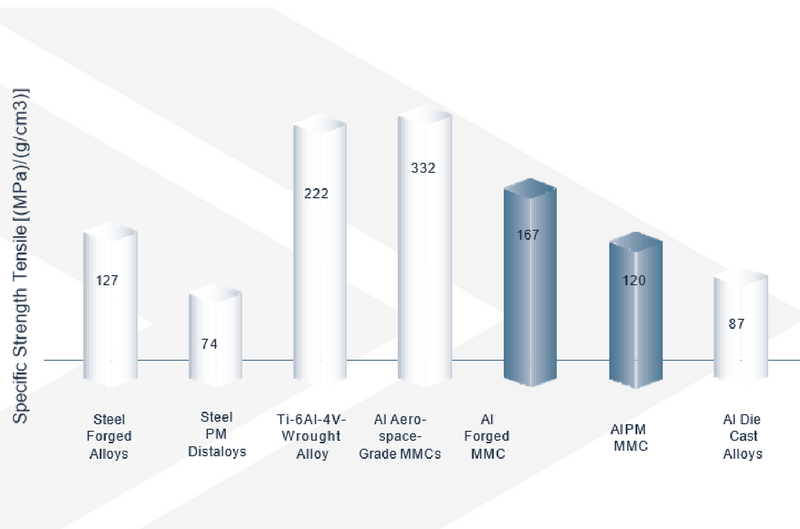
The unique thermal properties and wear resistance of FRING’s Aluminum MMC materials create unmatched efficiency gains. This material performs at strength levels that die-cast aluminum cannot achieve.
Real-world example: pump applications
Conventional steel rotating elements used in aluminum housings have a lower coefficient of thermal expansion than the housing itself. As temperature rises, this mismatch leads to pump inefficiencies. Standard aluminum materials, on the other hand, lack the wear resistance required to function as pump elements.
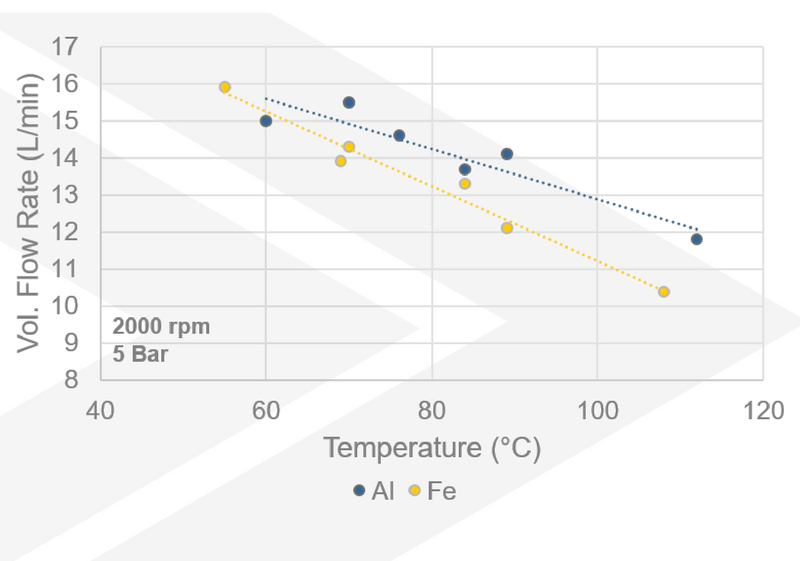
FRING’s solution is our specially designed Aluminum MMCs, which offer:
- Optimized thermal properties
- High strength and wear resistance
The result is a pump system that can increase efficiency by up to 20%, enabling smaller and more efficient system designs.
Reductions in Size and Weight
While the automotive industry has already seen major advantages in mass and size reduction, all industrial markets have opportunities for lightweight savings.
Aluminum MMCs offer higher strength than die-cast aluminum, making it possible to convert steel products into weight-reduced applications by leveraging the lower density of aluminum. Our lightweight products typically achieve overall weight savings of 50 to 60 percent—including assemblies, hand tools, and gears—creating competitive advantages for lighter, more efficient portable applications.
Beyond mass reduction, lower weight results in reduced inertia and improved NVH performance. Why does that matter? FRING’s MMC materials generate less noise and vibration, producing quieter, higher-performing products.
Thermal Management
When we say thermal management, we mean our technology’s ability to maintain a product’s normal operating temperature using aluminum’s industry-leading thermal conductivity.
FRING’s lightweight technology delivers high thermal conductivity for power electronics, processor cooling, and lighting applications. For these applications, a high thermal conductivity material can significantly improve overall efficiency.
Example: heat sinks for car radio cooling
FRING’s heat sinks offer exceptional thermal conductivity, which reduces the required thermal mass of the product. Less thermal mass means less space and less weight—a significant advantage for space-constrained applications.
Our heat sink material was developed specifically to leverage the advantages of powder metallurgy, providing thermal management performance that die casting cannot match.
Key Takeaways
To summarize, here are the main benefits of FRING’s lightweight technology across all market applications:
- Aluminum MMC material handles high strength and wear resistance requirements while offering incomparable thermal properties.
- FRING’s lightweight materials deliver weight, size, and mass reductions for portable and efficient applications.
- High thermal conductivity leads to less thermal mass in a product, creating space and weight-reduced designs.
- FRING continues to develop higher-strength materials and processes, such as aluminum forged MMC materials, to push lightweighting further.
