Light, small, strong, and efficient — these are the non-negotiable parameters for by-wire applications in hybrid and fully electric powertrains.
Add the pressures of emission reduction targets and the demand for competitive-cost new technologies, and automotive engineers face a significant challenge in the next wave of electrification development.
So, how can a partnership with a powder metallurgy (PM) supplier support automotive electrification?
To find out, we spoke with Stefan Tiller, who leads the Advanced PM Technology Group for Vehicle Electrification at FRING Powder Metallurgy.
Q: Sometimes powder metallurgy is perceived as a heavy, slow process. How can PM turn this narrative around and support vehicle electrification at scale?
Stefan Tiller: Unfortunately, some still hold prejudices about PM technology. But when we work with engineers who are open to its capabilities, they quickly become excited about the advanced solutions we can provide.
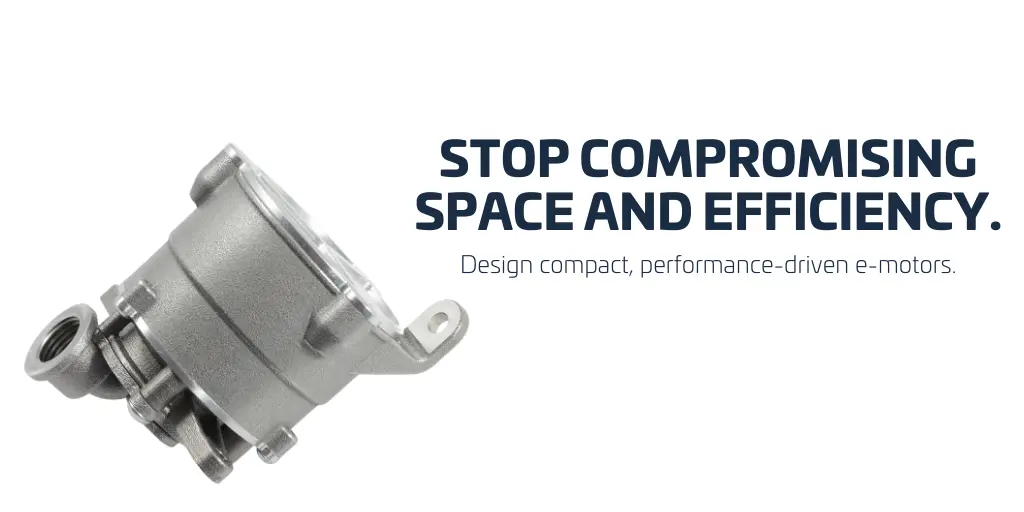
PM enables endless material compositions that are not feasible with traditional wrought steels. For electrified applications, magnetically active materials with very specific physical requirements are essential. That’s where we excel — we can design material characteristics around specific application requirements.
And is PM competitive for large-scale production? Absolutely. There are many proven examples where PM is the best choice — small gears, sliding bearings, and especially structural components, all known for their unique functional and economic advantages.
Q: Can you share concrete examples of PM in hybrid and fully electric vehicles?
Stefan Tiller: You’ll find PM components in electromagnetic applications like:
- Linear actuators
- E-drive traction motors
- Electric pumps
For these applications, specific magnetic material characteristics are critical. Our soft magnetic sintered and non-sintered iron types — which we call Soft Magnetic Composites (SMCs) — are the perfect fit.
Another key area is by-wire applications. Steer-by-wire, shift-by-wire, and brake-by-wire have benefited from sintered components for years with cost-effective solutions.
I still remember 2006, when we delivered the first pair of PM belt pulleys for an electrically assisted EPS steering system. Since then, steer-by-wire has spread from luxury vehicles to mid-range and even small cars.
Q: What about brake-by-wire? What role does PM play there?
Stefan Tiller: Brake-by-wire is another area where sintered components are essential.
Think about parking your car. For about a decade, this function has been performed by electric parking brakes. As an added feature, assisted hill-start offers extra safety and comfort. In both cases, the driver simply pushes a button, and the brake is electrically activated or released.
In modern cars, emergency braking is automatically triggered when sensors or radar detect collision objects. This is only possible with brake-by-wire technology.
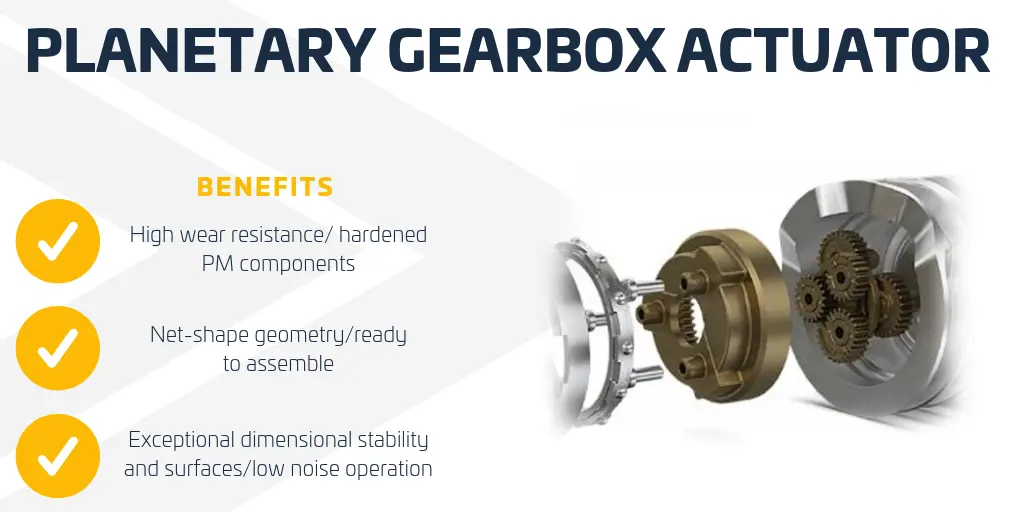
So what exactly does PM do? PM transforms the electric signal into an actuation force at the brake discs through a powerful, lightweight mechanical actuator. The heart of this actuator is a small planetary gearbox set — with high-strength gears and toothed carriers, all made from PM components.
This technology converts the rotational movement of an electric motor into a lower speed ratio, and then into an axial clamping force that secures or releases the rear wheel discs.
The same principle applies when you use paddle shifters on your steering wheel. The hardware that shifts the transmission gear inside a hybrid transmission is a planetary gearbox actuator — produced from hardened and annealed PM components. This is known as shift-by-wire.
Q: You mentioned SMCs for electric motor applications. What’s the “magic” behind SMCs?
Stefan Tiller: SMC material is based on pure iron powder, where each particle is coated with a very thin isolation layer. It’s called a 3D isotropic material, and it is crucial for reducing eddy current losses in electrical systems.
This material enables specific stator designs for e-motors, creating a unique 3D magnetic flux. That offers enormous advantages in:
- E-motor size reduction
- Design integration capabilities
- Highest torque and power densities
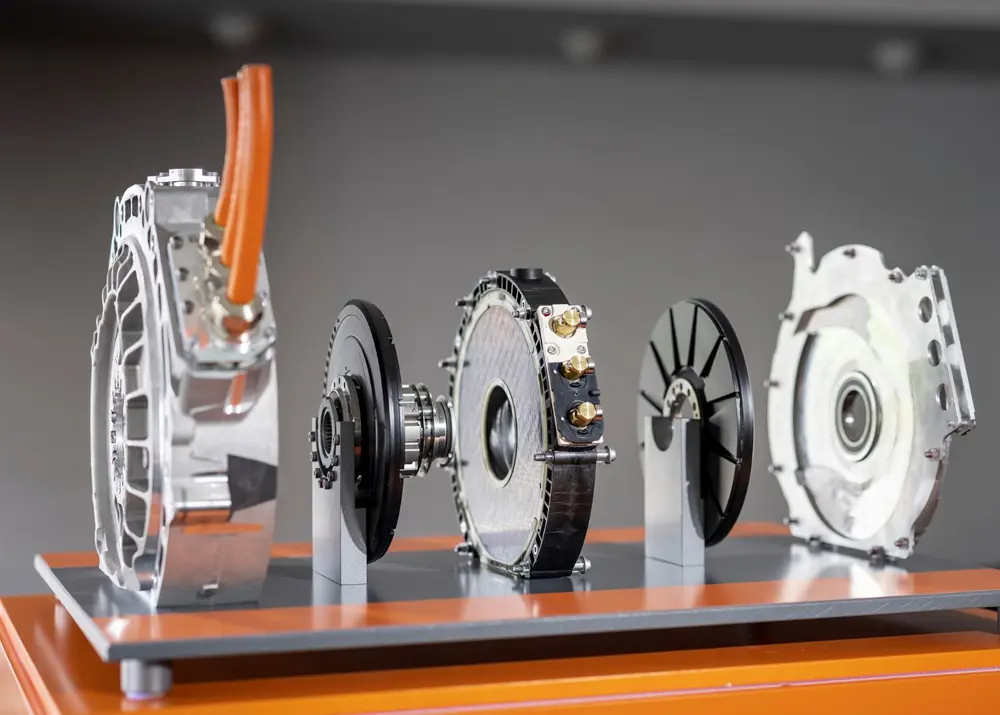
E-motors of this class are called Axial Flux Motors (AFM) or Transverse Flux Motors (TFM) — also known as e-motor topologies.
To put this in perspective: Ferrari’s new plug-in hybrid, the Stradale F90, uses the YASA e-motor — a high-performance AFM that features double-disc rotor and stator technology made with SMC poles.
Q: That’s astonishing. But AFMs and TFMs aren’t widely known yet. Why should electrical design engineers consider them?
Stefan Tiller: First, thank you for helping bring light to SMC-powered e-motors!
Here’s my honest view: If electrical engineers are already happy with the efficiency of standard radial flux motors and have enough space, there’s no urgent need to promote AFM or TFM.
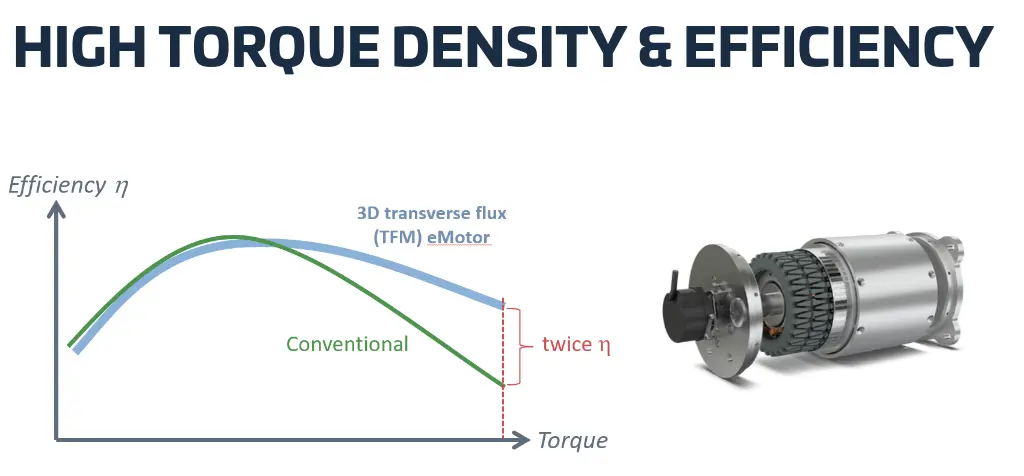
However — most current and future automotive and industrial applications demand higher efficiency, smaller size, and lighter weight.
SMC-based e-motor types meet the highest expectations for:
- Power density
- Torque density
- Overall efficiency
Plus, the assembly process is easier due to less complex winding of copper coils, which can also reduce investment in winding equipment.
AFM motors also enable space-saving, integrated designs — ideal for small assembly spaces like e-pumps.
The latest design and simulation software for e-motors is generally capable of handling AFM and TFM types. Engineers can find electromagnetic values for our soft magnetic iron materials (sintered and non-sintered SMC) on our website.
Key takeaways
| Challenge | PM Solution |
|---|---|
| Need for lightweight, compact designs | SMC enables 3D magnetic flux, reducing motor size |
| High torque and power density | AFM/TFM topologies deliver superior performance |
| Cost-effective large-scale production | PM offers unique functional and economic advantages |
| By-wire applications (steer, shift, brake) | Planetary gearbox actuators made from PM components |
FRING Powder Metallurgy: Validating the future of electric vehicles, one component at a time.
